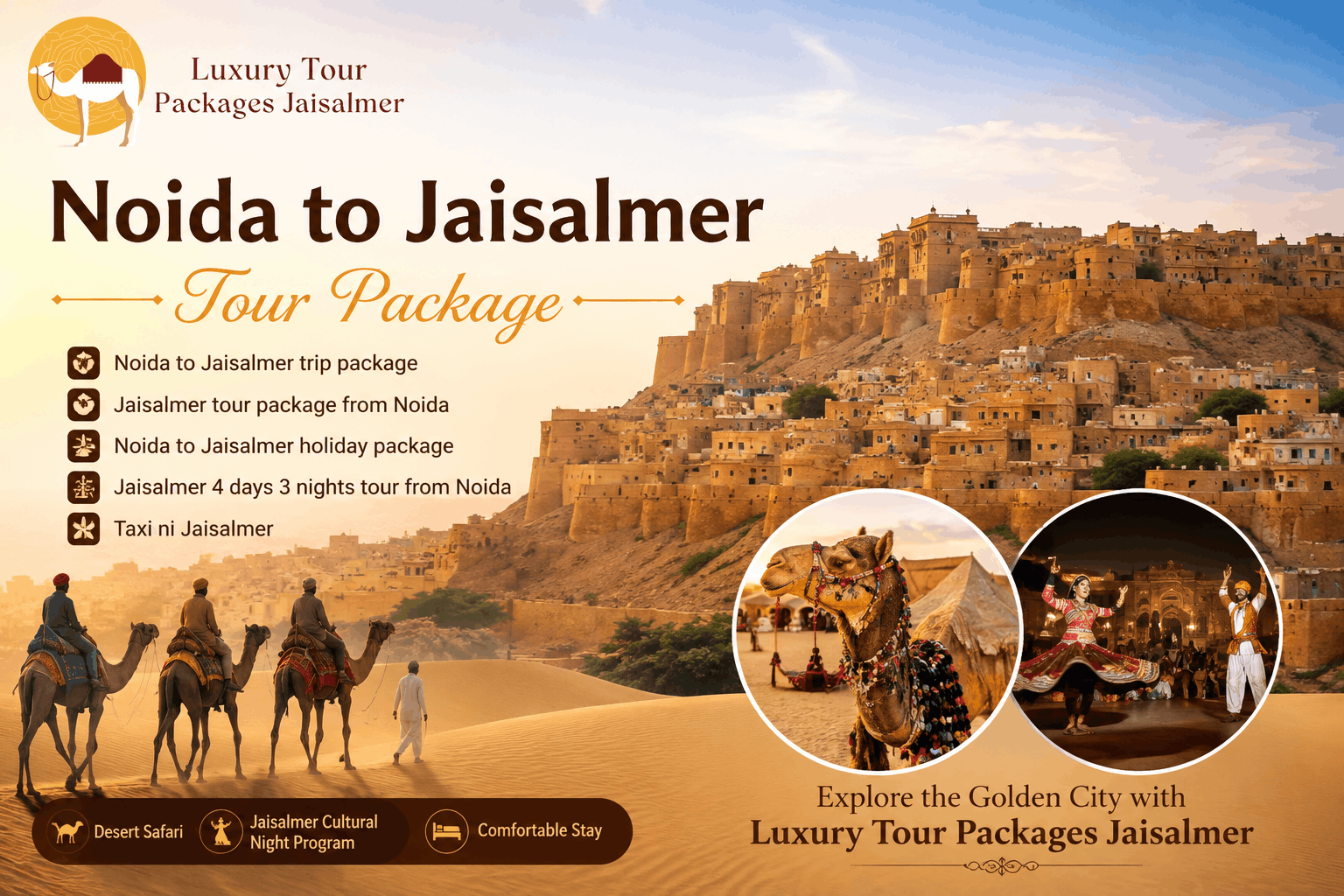


If you're planning a trip to the Thar Desert, the days will give you the fort, the havelis, and the camel rides. But it's the nights that people actually remember. Once the sun drops behind the dunes, Jaisalmer's desert camps turn into something else entirely — bonfires, live folk music, and a Kalbelia dance performance that's hard to describe until you've sat through one yourself.
This guide walks through what the cultural night program actually involves, why "Folk Music by Night" has become such a draw for travelers booking a night stay camp in the desert, and how it usually fits into a standard Jaisalmer tour package 2 night 3 days itinerary.
What Is the Jaisalmer Cultural Night Program?
The cultural night program is an evening of live entertainment held at desert camps around Sam and Khuri, usually built around three things: a bonfire, folk music, and a Kalbelia dance performance. It typically starts right after the camel or jeep safari winds down, around sunset, and runs for about an hour and a half to two hours before or during dinner.
It's not a staged theater act bussed in from a city. Most performers come from local communities — the Manganiyar musicians and Kalbelia dancers — who've been doing this professionally, often across generations, long before desert tourism became a business.
Folk Music by Night: The Heart of the Evening
The phrase "Folk Music by Night Jaisalmer" gets thrown around a lot in Jaisalmer tour listings, and it's not just marketing. The music genuinely carries the evening. Expect instruments like the khartal (wooden clappers), the dholak (hand drum), and occasionally the kamaycha, a bowed string instrument specific to Rajasthan.
The set usually opens with slower, traditional Rajasthani folk songs before building into faster rhythms that lead into the dance performance. Unlike a pre-recorded soundtrack, this is live, and the musicians often adjust the pace based on the crowd's energy that night. Sitting close to the fire while this plays, with the temperature dropping and the sky turning properly dark (there's very little light pollution out in the dunes), is genuinely one of the better travel experiences you can have in Rajasthan without spending a fortune on it.
The Kalbelia Dance
The centerpiece of most cultural night programs is the Kalbelia dance, performed by women from the Kalbelia tribe — a community traditionally associated with snake charming. The dancers wear black skirts with mirror work and silver embroidery, and the movements are quick, fluid, and physically demanding to watch performed live. UNESCO added Kalbelia to its Intangible Cultural Heritage list in 2010, which says something about how distinct and well-preserved this art form still is.
Some larger camps add extras — a fire dance, a puppet show (Kathputli), or acrobatics — but Kalbelia is almost always the main draw, and it's usually placed toward the middle or end of the program.
Dinner by the Fire
Once the performance winds down, dinner is typically served buffet-style near the same fire pit. Standard fare includes dal baati churma, gatte ki sabzi, roti, rice, and a simple dessert. It's not gourmet cooking, and it doesn't need to be — eating a hot meal outdoors, with musicians still playing softly in the background and the desert cold setting in, is the actual point.
Choosing a Night Stay Camp
Where you stay matters more than most people expect. A basic night stay camp with shared tents and a simple bonfire setup will run you a fraction of what a luxury Swiss tent camp jaisalmer with private bathrooms and heaters costs. Both include the cultural night program in most cases, but the atmosphere is different:
- Budget camps tend to feel more communal — everyone's mixed together around one fire, which some travelers actually prefer for the social element.
- Luxury camps offer more privacy and comfort but can feel a bit more like a resort than a desert experience.
If the cultural night program is your main reason for going, a mid-range camp usually strikes the right balance — good production value without losing the raw, local feel.
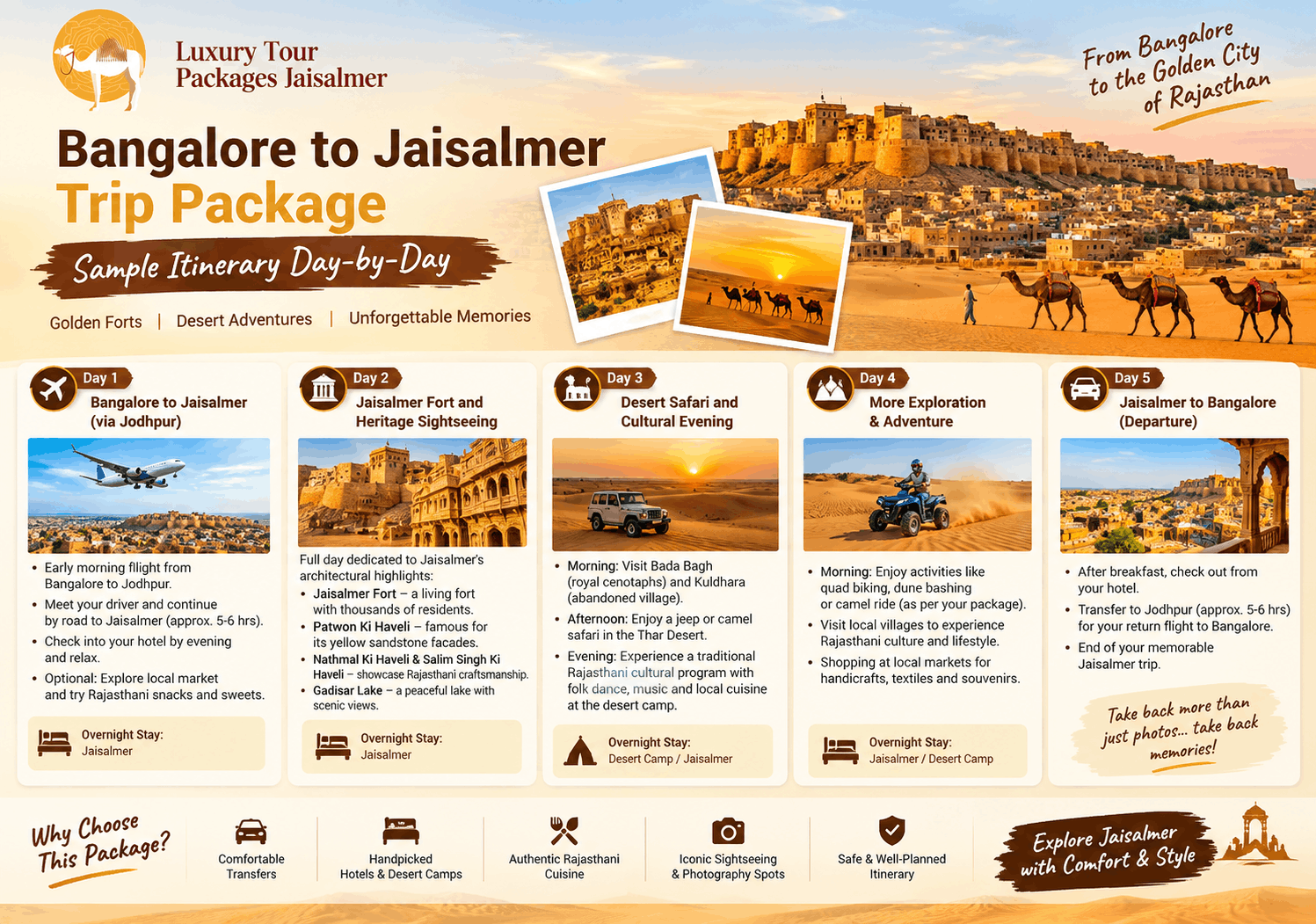
How This Fits Into a Jaisalmer Tour Package 2 Night 3 Days
For most travelers, the cultural night program isn't booked separately — it's built into a Jaisalmer tour package 2 night 3 days itinerary, which typically breaks down like this:
Day 1: Arrival in Jaisalmer, check-in, and a half-day covering Jaisalmer Fort, Patwon Ki Haveli, and the local markets.
Day 2: Morning at Gadisar Lake and the remaining havelis, followed by an afternoon transfer to the desert camp near Sam or Khuri. Camel or jeep safari at sunset, followed by the cultural night program — folk music, Kalbelia dance, and bonfire dinner — then an overnight stay at the camp.
Day 3: Early sunrise over the dunes, breakfast at the camp, and departure or transfer back to the city.
This structure works well because it front-loads the sightseeing and saves the desert camp experience for the second night, so you're not rushing straight from a long drive into the evening program.
A Few Honest Notes Before You Book
- Bring warm clothing. Even in warmer months, desert nights get cold fast once the sun is down.
- Ask before photographing performers up close. Most are fine with it, but it's a basic courtesy.
- Bigger camps near Sam Dunes can feel more commercial. If you want something quieter, look at smaller camps closer to Khuri.
- The program is almost always included in standard packages, so you shouldn't need to pay extra unless you've booked a stripped-down, camp-only option.
FAQ: Jaisalmer Cultural Night Program
1. What is included in the Jaisalmer cultural night program? Most programs include a bonfire, live folk music (often billed as "Folk Music by Night"), a Kalbelia dance performance, and a buffet dinner. Some camps add a fire dance or puppet show as extras.
2. What time does the cultural night program start? It usually begins around sunset, right after the camel or jeep desert safari, and runs for roughly 1.5 to 2 hours before or alongside dinner.
3. Is the cultural night program included in a Jaisalmer tour package 2 night 3 days itinerary? Yes, in almost all standard packages the desert camp night — including the cultural program and dinner — is built into the second night of a 2N/3D itinerary.
4. Do I need to pay extra for the Kalbelia dance and folk music show? No, it's typically included when you book a night stay camp as part of a desert safari package. Only very basic, camp-only bookings might exclude it.
5. Is the Kalbelia dance performance authentic? Yes. It's traditionally performed by women from the Kalbelia tribe and is recognized by UNESCO as part of India's Intangible Cultural Heritage. Camps generally hire local performers rather than outside entertainers.
6. What should I wear for the cultural night program? Warm layers are essential, even in summer. Desert temperatures drop sharply after sunset, so a shawl, jacket, or sweater is recommended regardless of the season.
7. Are budget night stay camps as good as luxury ones for the cultural program? The cultural night program itself is usually similar across camp categories. The difference lies in accommodation comfort — budget camps offer shared or simple tents, while luxury camps provide private tents with better amenities.
8. Can I take photos or videos during the performance? Yes, most camps allow it. It's good practice to ask the performers or camp staff before getting close with a camera or recording video.