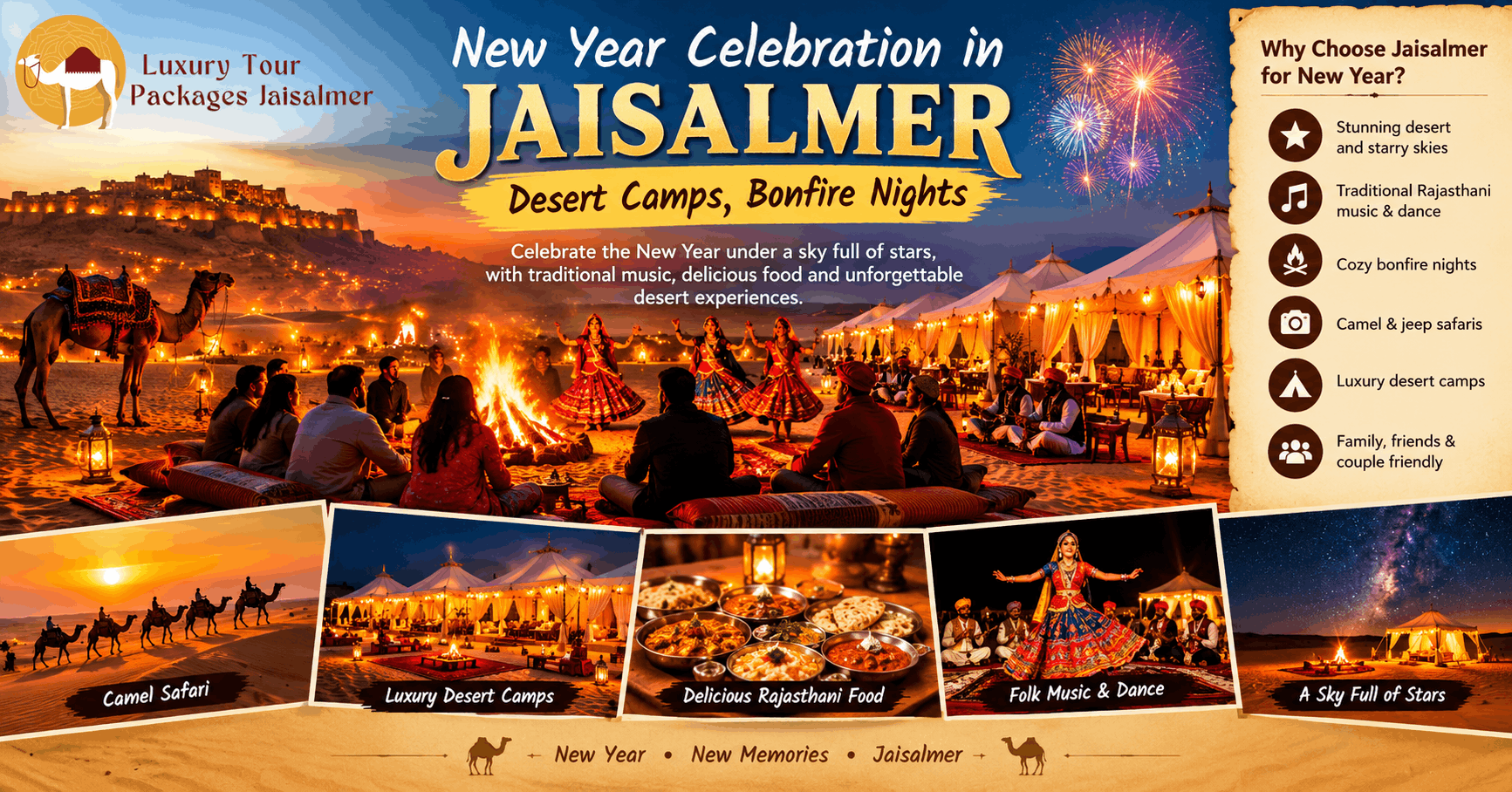

There's a point on every Jaisalmer trip where the forts and the bazaar noise fall away and all you've got left is sand to the horizon. That's the desert camp. A night out there, under a sky with zero light pollution, is usually the thing people remember most about the whole trip — more than the fort, more than the havelis, more than the shopping in the old city.
We put together this guide, based on what we've seen after years of arranging desert stays as part of full Jaisalmer tour packages, to walk you through what a camp actually costs, what you're getting for it, and a few things worth checking before you hand over a deposit. It's longer than the usual "top 5 camps" listicle on purpose. Prices and packages in Jaisalmer change fast between operators, and the details that matter — tent category, what's actually included, how you're even getting out there — rarely make it into the marketing photos.
Why bother with a desert camp at all
Jaisalmer's old city is genuinely worth a full day or two on its own. The fort is still lived-in, which you don't get in most Rajasthani cities anymore, and the havelis around Patwon Ki Haveli are worth wandering through slowly. But the dunes at Sam and Khuri, roughly forty minutes to an hour outside the city, are a completely different experience. You get a camel or jeep safari on the sand, dinner and folk music around a bonfire once the sun drops, and then a night sky that most city dwellers haven't actually seen in years. No streetlights, no smog, just stars.
It's not a subtle experience. Some travelers find one night is plenty; others end up adding a second. Either way, build real time into your itinerary for it rather than treating it as a rushed add-on — which is why most decent Jaisalmer tour package itineraries block out a full evening and morning for it instead of cramming it in.
The different types of camps
Before comparing prices, it helps to know what category you're actually looking at, since the word "camp" covers a huge range of experiences.
Budget camps are simple. Basic tents, shared washrooms, a straightforward dinner-and-bonfire setup. Fine for backpackers or anyone who just wants to say they did the desert night without spending much on it.
Standard camps step things up — private tents with attached bathrooms, better bedding, and a fuller cultural program that usually adds a folk dance performance alongside the dinner and bonfire.
Luxury camps are where things get genuinely comfortable. Spacious, well-furnished tents, air-conditioning or heating depending on the season, multi-cuisine buffet dinners, and better-produced performances.
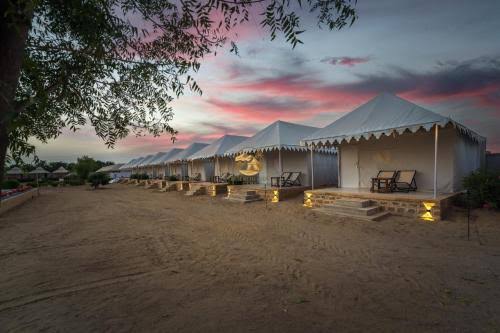
Swiss tents have become the most requested category over the last few years, and for good reason. They strike a balance between rustic desert charm and hotel-level comfort — proper cots or king-sized beds, attached bathrooms with hot water, sometimes a small sit-out area facing the dunes. Couples and small groups gravitate here because you get the "we're actually in the desert" feeling without giving up a decent night's sleep.
Family camps are built for larger groups traveling with kids. Multi-bedded tents or clusters of connected tents, shorter and safer camel or jeep rides, dietary flexibility at dinner, and timings that don't assume every guest wants to eat at 9pm. If you're trying to work out which is the best desert camp in Jaisalmer for your trip, this is usually the first fork in the road — couples' comfort versus family practicality — before price even enters it.
Cost and Pricing Overview
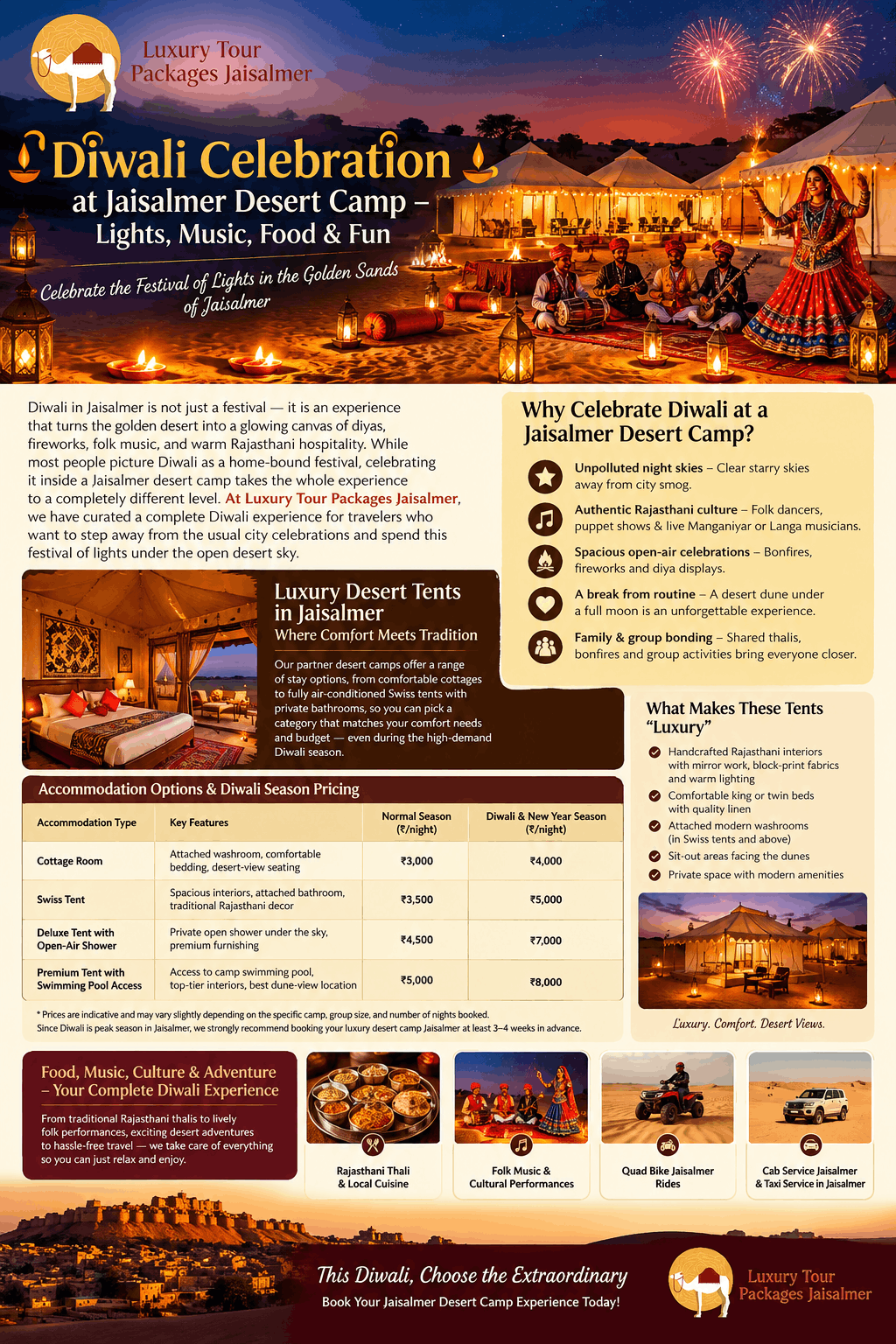
Prices move around depending on season, tent category, and how far ahead you book, but here's a rough breakdown to work from:
- Budget camps: roughly ₹1,500–₹2,500 per person, per night, including dinner and a basic bonfire.
- Standard camps: usually ₹2,500–₹4,500, including dinner, breakfast, and a cultural program.
- Swiss/luxury camps: generally ₹4,500 up to ₹10,000 or more per person, for premium tents, attached bathrooms, multi-cuisine buffets, and better hospitality overall.
- Ultra-luxury camps: ₹10,000 to ₹20,000+ per night, often including private jeep safaris, spa services, and sometimes a dedicated butler.
Season matters more than people expect. October through March is peak season — pleasant weather, high demand, higher rates. April through September, the monsoon and peak summer months, usually comes with noticeably discounted packages, though the heat is a real factor to weigh against the savings.
What's typically included
Inclusions vary by camp and tier, but most desert camp packages cover pickup and drop from your hotel, a camel or jeep safari on the dunes, welcome refreshments, a traditional Rajasthani buffet dinner, live folk music and dance around the bonfire, the overnight tent stay, and breakfast the next morning before checkout. Some of the nicer swiss and premium packages throw in unlimited soft drinks, bonfire snacks, or a reserved spot for sunset viewing, but don't assume those extras are standard — ask.
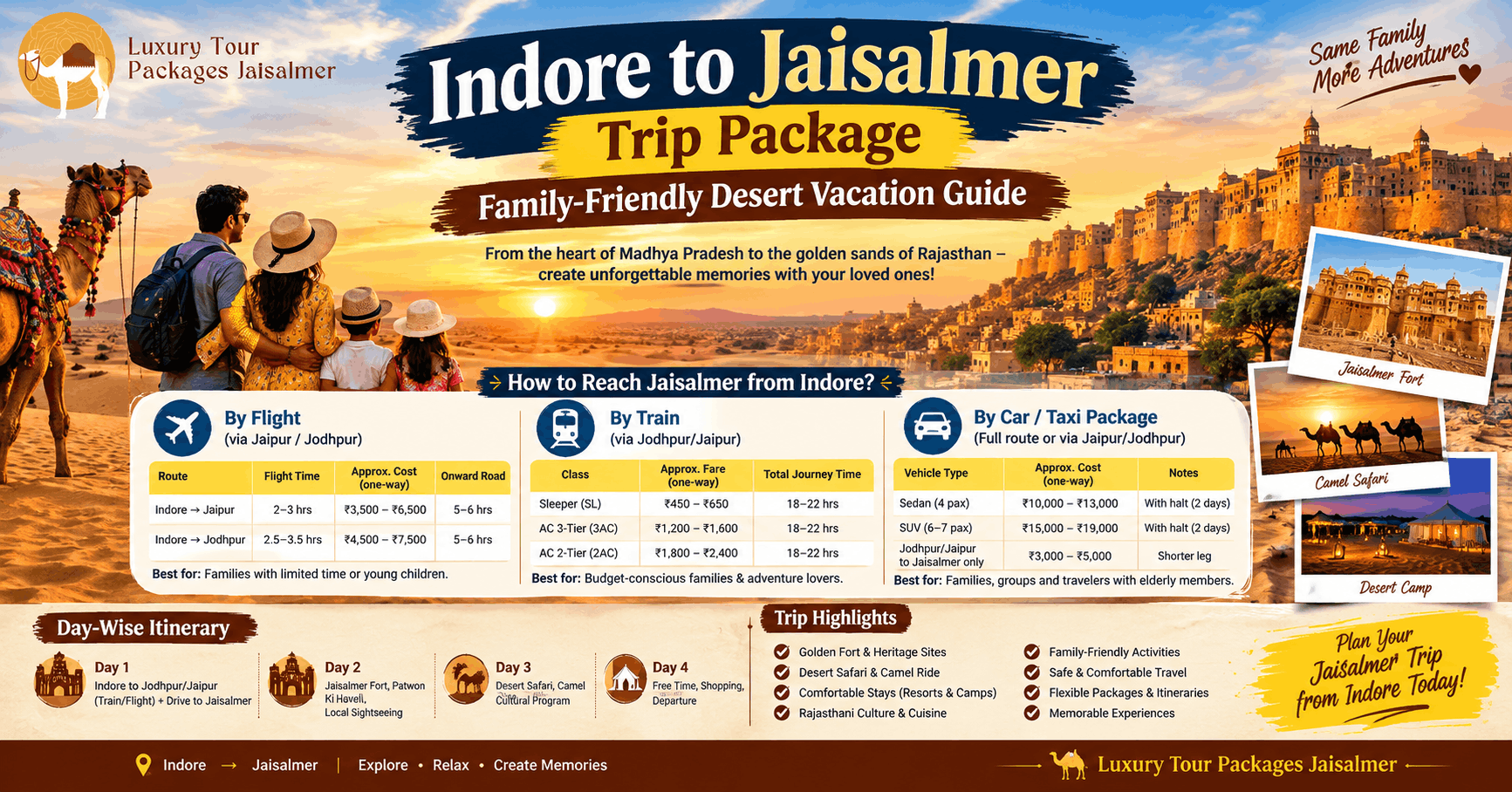
One thing worth flagging separately: transport. A lot of travelers underestimate how much the getting-there part shapes the night. If your camp isn't bundled into a package with pickup included, you'll want a reliable taxi service in Jaisalmer that knows the desert roads well — some camps sit down unmarked turnoffs a regular city driver won't recognize. Small detail, until you're outside your hotel at 3pm wondering if the ride is showing up.
How to actually choose one
With dozens of camps spread across Sam and Khuri, a few factors matter more than the brochure photos.
Purpose of the trip. A romantic getaway calls for something quieter and more private, like a swiss or luxury tent. A family trip benefits more from space and staff used to handling kids.
Location. Sam Dunes is more developed and easier to access, with a well-known sunset point that gets busy in peak season. Khuri Dunes is quieter and feels a bit more authentic.
Reviews. Check recent traveler reviews specifically for cleanliness, food quality, and safety, not just the star rating.
Inclusions versus price. Compare what's actually in the package rather than the headline number. Some cheaper listings quietly leave out the safari or the evening performance, and you won't notice until you're already there.
Booking tips worth actually following
Book at least two to three weeks ahead if you're traveling between October and February, since the best swiss and luxury tents fill up first. Confirm your exact tent category before paying — camp names can be misleading, so ask specifically what's included at that level. If you're bringing kids, confirm bed counts per tent and how close family tents sit to each other. Check the safari timing directly, since it's usually scheduled around sunset and missing that window is a genuine disappointment. Clarify the cancellation policy before you pay, since desert weather can occasionally affect plans. And if it fits your trip, look into a combined Jaisalmer tour package that bundles the desert night with fort visits, havelis, and local markets — usually a better rate than booking everything separately.
Bottom line
For most travelers, the desert camp night ends up being the highlight of the whole Jaisalmer trip. Whether that's a swiss tent for two, a family setup with the kids, or just the cheapest option that still gets you a bonfire and a clear sky, knowing the price ranges, what's actually included, and how you're getting out there makes the whole thing far less stressful to plan — and a lot closer to whatever picture you had in your head when you started looking for the best desert camp in Jaisalmer in the first place.
Frequently Asked Questions
1. What's the difference between a swiss tent and a luxury tent?
The terms overlap a lot in practice, but generally a swiss tent refers to the tent's structure — a canvas dome-style tent on a raised platform, usually with a proper cot, attached bathroom, and hot water. "Luxury" is more about the service tier: better furnishings, AC or heating, a multi-cuisine buffet, and premium bonfire entertainment. A camp can call itself both. Always ask directly what's inside the tent and what's included in the package rather than trusting the label alone, since naming isn't standardized across camps.
2. Is Sam Dunes or Khuri Dunes better for a desert camp?
It depends what you want. Sam Dunes is the more popular, more developed area — easier road access, more camps to choose from, and a well-known sunset point that gets crowded in peak season. Khuri Dunes is quieter, further from the city, and feels a bit more rustic and authentic since fewer tourists make it out there. If you want convenience and options, pick Sam. If you want fewer crowds and a slower pace, Khuri is usually the better call.
3. How far in advance should I book a desert camp?
During peak season, October through February, book at least two to three weeks ahead, especially if you want a swiss or luxury tent — those categories sell out first. Outside peak season, a few days' notice is often enough since demand drops off and camps have more open availability. If you're traveling around a major festival or long weekend, book even earlier, since local and domestic travelers tend to fill up the best camps well before international visitors even start looking.
4. What's included in the price, and what's extra?
Most standard packages include hotel pickup and drop, a camel or jeep safari, welcome drinks, dinner, a bonfire with folk music, the tent stay, and breakfast. Extras that sometimes cost more include private safaris, alcohol, spa services, or a butler at ultra-luxury camps. Cheaper budget packages sometimes exclude the safari or performance entirely, so it's worth asking for a full breakdown before booking rather than assuming everything in this list is automatically included at every price point.
5. Are desert camps suitable for families with young kids?
Yes, but pick a camp that specifically markets itself as family-friendly rather than a couples-oriented swiss or luxury setup. Family camps usually offer multi-bedded tents or tents placed close together, safer and shorter camel or jeep rides, more flexible dinner timings, and staff used to handling kids around the bonfire area. If you're booking a standard or luxury camp instead, it's worth calling ahead to confirm they can accommodate a family group comfortably before you commit.
6. What happens if the weather changes or I need to cancel?
Cancellation and rescheduling policies vary by camp and by how close to your stay you cancel, so it's worth asking directly before you pay rather than assuming a standard refund policy applies. Desert weather occasionally causes camps to adjust safari timings or bonfire plans, but the overnight stay itself rarely gets cancelled outright. If you're booking during monsoon season, it's worth double-checking how the camp handles rain specifically.